

Bone conduction headphones have gained wide adoption in sports, outdoor activities, and professional environments due to their open-ear design and comfort advantages. Because they do not sit inside the ear canal or cover the ears, many users assume bone conduction headphones are inherently safer for hearing than traditional in-ear or over-ear headphones.
This assumption is partially true—but incomplete.
Bone conduction headphones can reduce certain outer- and middle-ear issues, yet they do not eliminate the risk of noise-induced hearing loss (NIHL). Like any audio device, hearing safety still depends on volume level, listening duration, and cumulative daily exposure, a principle widely recognized in noise-induced hearing loss research 1.
This article explains how bone conduction headphones work, compares their hearing safety profile to conventional headphones, outlines potential risks, and provides clear, evidence-based guidelines for safe long-term use.
How Bone Conduction Headphones Transmit Sound Without Ear Damage
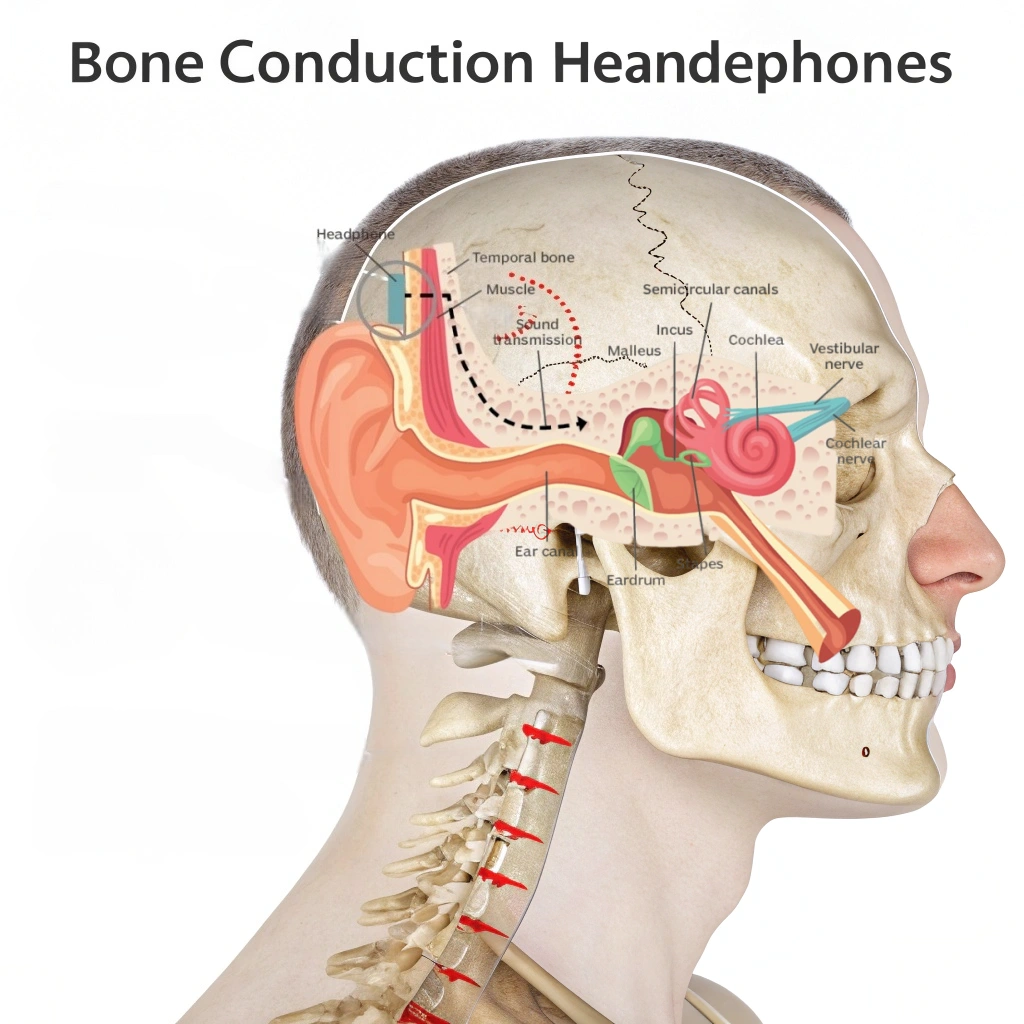
Bone conduction headphones use vibration rather than air pressure to deliver sound.
Instead of directing sound waves through the ear canal and eardrum, these devices use transducers that vibrate against the cheekbones or temples. The vibrations travel through the skull bones directly to the cochlea, the inner-ear organ responsible for converting mechanical energy into nerve signals, as explained in clinical overviews of bone conduction hearing mechanisms 2.
Key technical points:
- The eardrum and middle ear are bypassed
- The cochlea still processes sound energy
- The brain interprets bone-conducted vibration the same way it interprets air-conducted sound
This means that while bone conduction avoids stressing the eardrum, inner-ear structures are still exposed to sound energy. From a hearing-damage perspective, this distinction is critical.
Bone Conduction Is Not Automatically “Hearing-Safe”
A common misconception is that bypassing the eardrum prevents hearing damage. In reality:
- Noise-induced hearing loss occurs in the cochlea
- Both air-conducted and bone-conducted sound stimulate cochlear hair cells
- Excessive sound energy—regardless of delivery path—can damage these cells permanently
Audiology studies comparing sound transmission pathways show that bone- and air-conducted sound affect cochlear hair cells similarly3 when loudness levels are equivalent.
As a result:
- Unsafe volume and long exposure times still increase hearing-loss risk
- Bone conduction headphones should follow the same safe-listening principles as conventional headphones
Potential Hearing Safety Benefits Compared to Traditional Headphones
While not risk-free, bone conduction headphones do offer practical ear-health advantages in certain use cases.
1. Reduced Outer- and Middle-Ear Stress
Because the ear canal remains open:
- No physical insertion into the ear
- No direct air pressure on the eardrum
- Lower risk of discomfort during long sessions
This can be beneficial for users prone to ear canal irritation or moisture buildup, issues often associated with prolonged use of in-ear devices as noted in ear health guidance for headphone use4 .
2. Open-Ear Awareness May Reduce Over-Amplification
Bone conduction headphones allow ambient sound to remain audible. In some scenarios, this:
- Reduces reliance on isolating high volumes
- Encourages situational awareness rather than immersion
However, this benefit only applies if users resist the urge to increase volume in noisy environments.
3. Improved Comfort for Long Wear
Many users report less fatigue compared with in-ear or over-ear designs, which can encourage healthier listening habits when volume is kept moderate.
Possible Risks: Volume Levels, Vibration, and Long-Term Use
1. Loudness Still Determines Hearing Risk
Hearing damage risk is closely tied to sound intensity and exposure time. According to occupational hearing guidelines from the National Institute for Occupational Safety and Health 5:
| Sound Level | Approximate Safe Exposure |
|---|---|
| 85 dBA | ~8 hours |
| 88 dBA | ~4 hours |
| 91 dBA | ~2 hours |
| 100 dBA | ~15 minutes |
Bone conduction headphones can exceed safe cochlear exposure if played too loudly, even though they may feel different from traditional headphones.
2. High Volume Can Cause Vibration Discomfort
At elevated output levels, users may experience:
- Strong facial vibration
- Pressure sensation on the cheekbones
- Headache or dizziness in sensitive individuals
While discomfort may act as an early warning, it should not be relied upon as a safety mechanism.
3. Long-Term Maximum-Volume Use Increases Risk
Long-term listening habits that exceed recommended exposure limits are associated with increased risk of tinnitus and permanent hearing loss, as summarized in long-term headphone use studies6.
4. Non-Hearing Side Effects
Reported side effects include:
- Skin irritation at contact points
- Vertigo or balance discomfort
- Temporary pressure sensations
Proper fit, padding materials, and regular breaks help mitigate these issues.
Best Practices to Use Bone Conduction Headphones Safely
Following established safe-listening principles significantly reduces risk.
Keep Volume Moderate
- Aim for 50–60% of maximum volume for routine listening
- Avoid exceeding ~70% except briefly and in quiet settings
- If people nearby can clearly hear your audio, volume is likely too high
Manage Listening Duration
- Take regular breaks during long sessions
- Reduce continuous listening time as volume increases
- Remember: safe exposure time drops rapidly at higher loudness levels
Be Cautious in Noisy Environments
Ambient noise increases the temptation to raise volume.
- Bone conduction can remain effective at lower volumes
- Avoid turning volume up to overpower traffic, machinery, or crowds
Use Loudness Monitoring and Limits
Where available:
- Enable smartphone volume-limit features
- Track listening time
- Follow consumer-device guidance on safe listening limits for headphones7
Watch for Warning Signs
Reduce use immediately if you notice:
- Ringing in the ears (tinnitus)
- Muffled hearing after listening
- Difficulty understanding speech in noisy environments
Persistent symptoms should be evaluated by a hearing professional.
Are Bone Conduction Headphones Safer for Certain Users?
Bone conduction headphones may be a better option for:
- Users sensitive to in-ear pressure
- Individuals prone to outer-ear infections
- Situations requiring environmental awareness
For people with conductive hearing loss (outer or middle ear issues), bone conduction can transmit sound more effectively while avoiding damaged structures—provided volume remains controlled.
Conclusion: A Balanced View on Hearing Safety
Bone conduction headphones are generally safe for hearing when used responsibly. They reduce certain outer-ear risks and improve comfort, but they do not eliminate the possibility of hearing damage.
Key takeaways:
- Bone conduction bypasses the eardrum, not the cochlea
- Loudness and exposure time still determine hearing risk
- Moderate volume, regular breaks, and awareness of warning signs are essential
When designed and used with appropriate volume limits, bone conduction headphones can be a practical and ear-friendly alternative—but not a substitute for safe listening habits.
For product developers, brand owners, and procurement teams, integrating volume-range controls, ergonomic transducer design, and clear safety guidance is essential for responsible long-term use without making unsupported “hearing-safe” claims.
Footnotes
- Explains how excessive sound exposure leads to permanent noise-induced hearing loss. ↩︎
- Medical overview of how bone conduction delivers sound to the inner ear. ↩︎
- Research comparing cochlear impact of bone- and air-conducted sound. ↩︎
- Guidance on ear health risks associated with prolonged headphone use. ↩︎
- Official exposure limits for noise levels and hearing safety. ↩︎
- Global recommendations for preventing hearing loss from personal audio devices. ↩︎
- Practical consumer guidance on setting safe volume limits on devices. ↩︎