Introduction
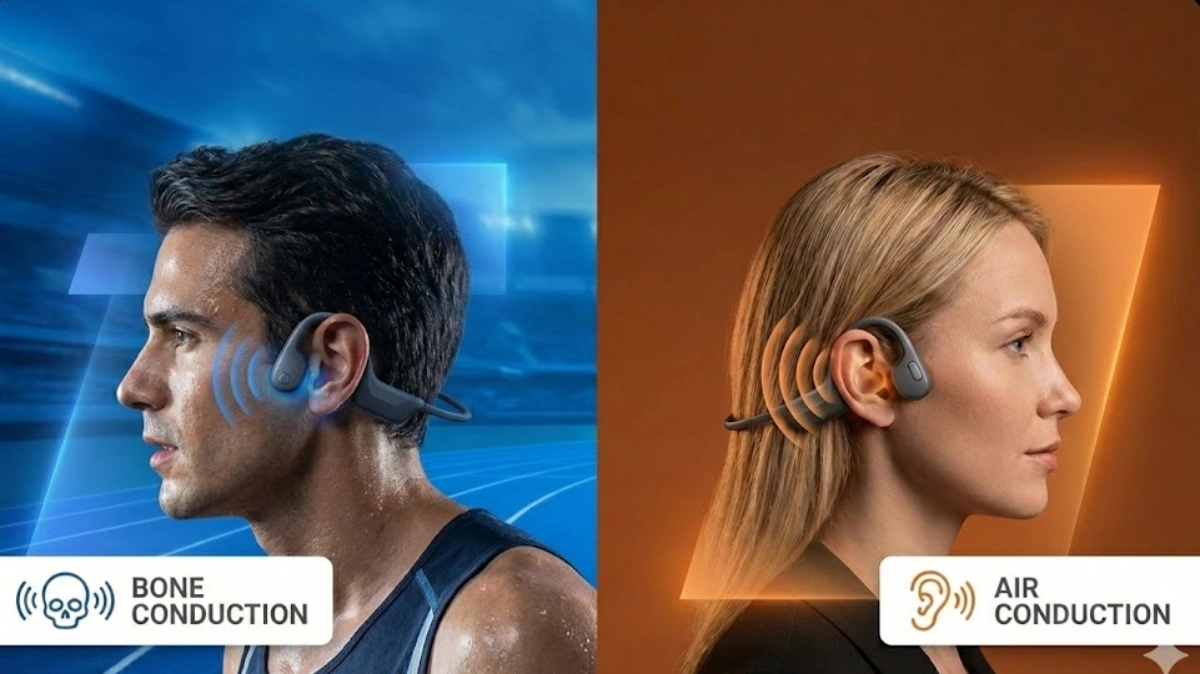
Bone conduction headphones have emerged as a distinctive category within the audio market, offering an alternative to traditional in-ear and over-ear headphones. Rather than transmitting sound through the ear canal, these devices deliver audio via vibrations that travel through the bones of the skull directly to the inner ear.
This open-ear listening approach has attracted runners, cyclists, industrial workers, and users with ear-related sensitivities. At the same time, bone conduction headphones remain a niche product due to limitations in sound quality, bass response, and performance in noisy environments.
This article provides a detailed and balanced analysis of the advantages and disadvantages of bone conduction headphones. By examining how they work, where they excel, and where they fall short, readers can better understand whether this technology is appropriate for their personal, professional, or commercial needs.
What Are Bone Conduction Headphones and How They Work
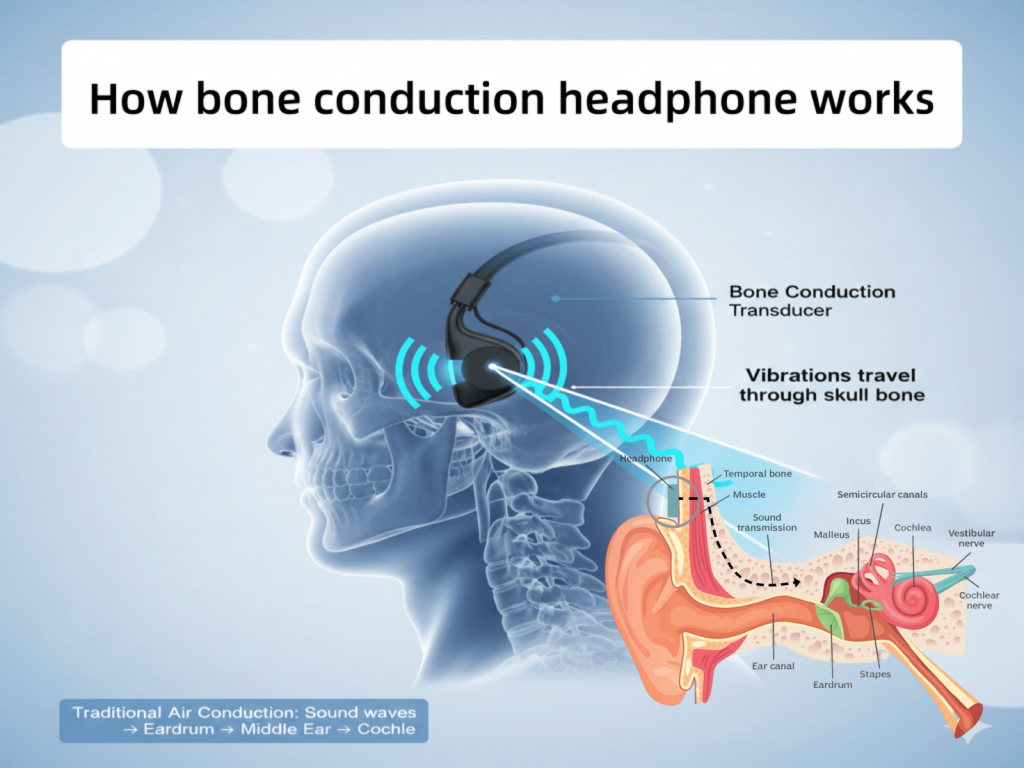
Bone conduction headphones use vibration-based transducers positioned on the cheekbones or temples. When an audio signal is played, the transducers convert electrical signals into mechanical vibrations. These vibrations bypass the outer ear and middle ear, traveling directly through the skull bones to stimulate the cochlea in the inner ear, a process explained in detail by bone conduction hearing mechanisms 1.
In conventional headphones, sound waves move through the ear canal and vibrate the eardrum. Bone conduction headphones skip this step entirely. Because the ear canal remains open, external sounds are still perceived naturally alongside the transmitted audio.
This technology has been used for decades in medical and military applications 2 before becoming available in consumer and professional audio products. Modern designs combine lightweight frames, wireless connectivity, and rechargeable batteries to create wearable, everyday devices.
Key Advantages: Safety, Comfort, and Situational Awareness
Enhanced Situational Awareness and Safety
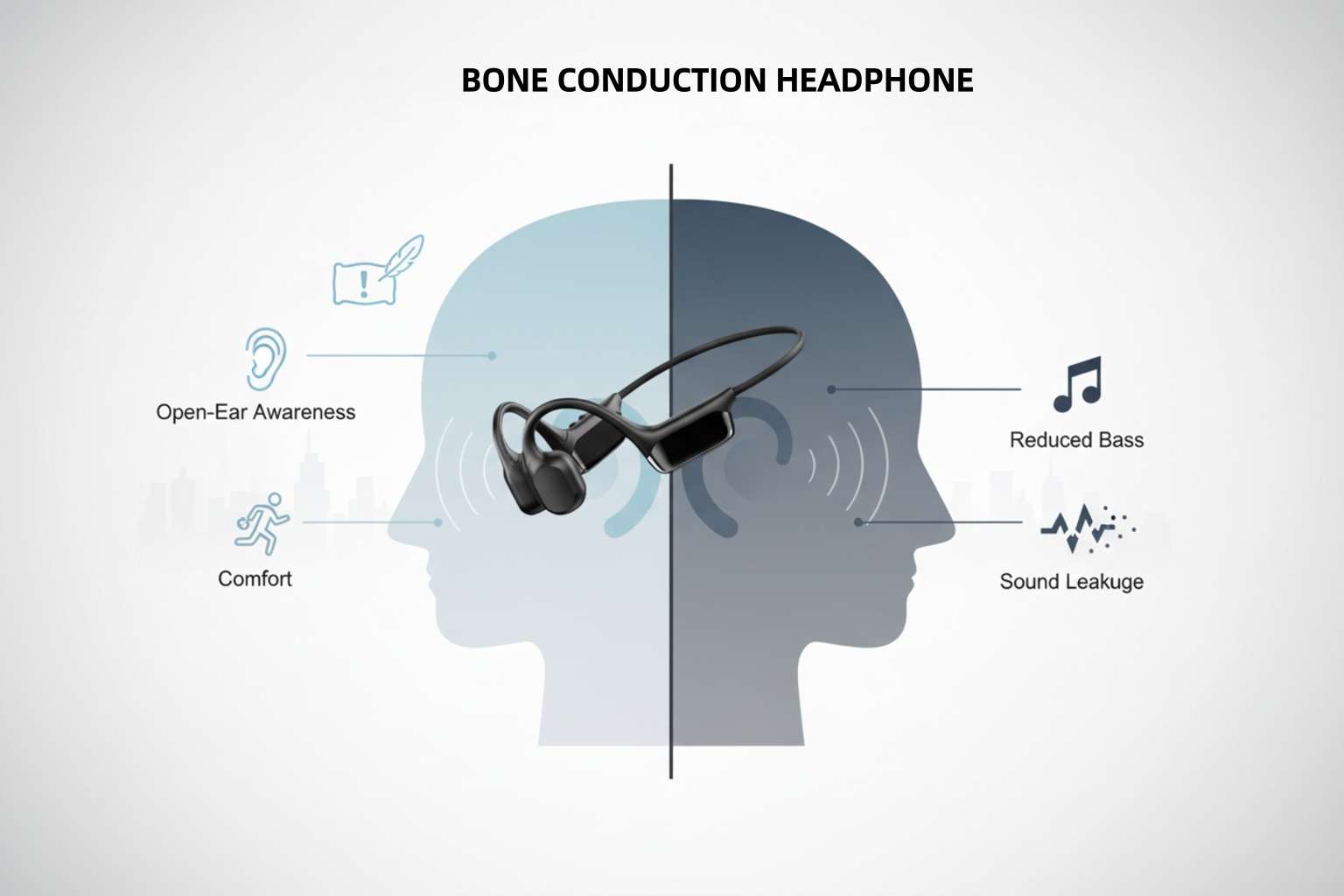
One of the most significant advantages of bone conduction headphones is their ability to preserve situational awareness. Since they do not block the ear canal, users can continue to hear environmental sounds such as traffic, approaching vehicles, alarms, and conversations.
This characteristic is especially valuable for:
- Runners and cyclists navigating roads or shared paths
- Urban commuters crossing busy intersections
- Workers in warehouses, factories, or construction sites
- Security and logistics personnel who must remain alert
In many regions, open-ear headphones are also considered safer or more compliant with local regulations for outdoor activities3 compared to noise-isolating headphones.
Improved Ear Health and Hygiene
Bone conduction headphones reduce many common issues associated with in-ear headphones. Because nothing is inserted into the ear canal, they avoid pressure buildup, irritation, earwax compaction, and moisture accumulation.
For users prone to ear infections or discomfort from earbuds, this design aligns with recommendations on preventing ear canal irritation4 and can offer a more hygienic listening solution, particularly for long daily use.
Long-Term Comfort and Wearability
The open-ear structure allows airflow around the ears, minimizing heat buildup and discomfort during extended wear. Many users find bone conduction headphones more comfortable for multi-hour use compared to in-ear or over-ear alternatives.
They are also compatible with glasses, helmets, and protective headgear commonly used in industrial settings that require personal protective equipment compatibility5.
Accessibility for Certain Hearing Conditions
Bone conduction technology can be beneficial for users with outer or middle ear issues, such as chronic inflammation or eardrum damage. Because vibrations reach the cochlea directly, bone conduction headphones may provide usable audio where traditional headphones cannot.
Research into conductive hearing loss solutions6 helps explain why this technology can be effective for certain users, even though consumer headphones are not medical devices.
Main Disadvantages: Sound Quality, Bass, and Noise Leakage
Inferior Sound Quality Compared to Traditional Headphones
Despite technological improvements, bone conduction headphones generally deliver lower sound quality than traditional wired or wireless headphones. Reduced dynamic range and distortion at higher volumes limit their suitability for critical listening.
Independent evaluations in headphone sound quality comparisons7 consistently show that bone conduction models lag behind conventional designs in audio fidelity.
Weak Bass Performance
Low-frequency sounds are particularly challenging to reproduce through bone vibration. As a result, bass response is often minimal compared to over-ear headphones or in-ear monitors.
Poor Performance in Noisy Environments
Because the ear canal remains open, external noise directly competes with audio playback, making busy streets, gyms, and public transport challenging listening environments.
Sound Leakage and Privacy Concerns
At moderate to high volumes, bone conduction headphones can produce audible sound waves that nearby people can hear, raising privacy concerns in quiet or shared spaces.
Potential Discomfort from Prolonged Vibration
Some users report pressure, mild headaches, or facial fatigue after long sessions. Proper fit, ergonomic design, and controlled volume levels are essential to reduce these effects.
Shorter Battery Life
Bone conduction headphones often require more power than traditional headphones due to constant vibration-based transmission, resulting in shorter battery life, especially at higher volumes.
Who Should Buy Bone Conduction Headphones and When to Choose Them
Ideal Users and Scenarios
Bone conduction headphones are best suited for users who prioritize awareness, safety, and comfort over audio fidelity, particularly in outdoor sports, commuting, and professional environments requiring constant awareness.
Less Suitable Applications
They are generally not recommended for audiophiles, immersive media consumption, studio monitoring, or loud environments where noise isolation is essential.
Bone Conduction Headphones vs Traditional Headphones
| Feature | Bone Conduction Headphones | Traditional Headphones |
|---|---|---|
| Ear Canal Blocked | No | Yes |
| Situational Awareness | High | Low to Moderate |
| Sound Quality | Moderate to Low | High |
| Bass Performance | Weak | Strong |
| Noise Isolation | None | Moderate to High |
| Long-Term Ear Comfort | High for many users | Varies |
| Suitability for Noisy Environments | Low | High |
Conclusion
Bone conduction headphones offer a unique balance of safety, comfort, and awareness that traditional headphones cannot provide. However, sound quality and performance trade-offs mean they are best viewed as a purpose-driven solution rather than a universal replacement.
Footnotes
- Explains how bone conduction transmits sound directly to the inner ear, bypassing the eardrum. ↩︎
- Overview of the historical use of bone conduction in military and medical fields. ↩︎
- Details pedestrian and road safety considerations related to situational awareness. ↩︎
- Medical guidance on reducing ear irritation and infection risks. ↩︎
- Official guidance on using audio devices alongside protective equipment. ↩︎
- Educational resource explaining conductive hearing loss and related technologies. ↩︎
- In-depth comparison of bone conduction headphones versus traditional audio designs. ↩︎